


















Options
Heating
When should I be changing my furnace filter?
We recommend homeowners check their furnace filter every month and replace it as needed.
Different types of filters are rated to last varying amounts of time:
- Economy panel filters only last about 30 days
- 2-inch filters should be changed every three months
- 4-inch filters can last six months
- 5-inch filters could be good for up to 12 months
However, there are many factors that can affect how quickly the filter becomes clogged:
- Having pets in the home will clog filters faster with their dander and fur.
- Keeping windows open or going in and out of the house often can let in dust and debris.
- Smoking in the house can reduce the longevity of filters.
Even though a 2-inch filter should last about 3 months, if you like to keep the windows open in the spring and have multiple pets, it could be full after a month. That’s why we encourage all homeowners to make filter maintenance a monthly task.
Why It’s Important to Change Filters
A blocked filter restricts airflow and can cause one of your furnace’s safety features to activate, shutting it down and leading to costly service calls. If you have allergies or respiratory issues, indoor air quality can suffer from clogged filters and aggravate breathing issues.
Signs Furnace Filter Needs to be Changed
Every month, make sure the furnace is off and remove the filter. If it’s visibly dirty and you can’t see the filter material, it’s time for a replacement. Prior to changing the furnace filter, you might notice that the HVAC system is cycling more frequently or that the home is dustier than usual—all signs that the furnace filter needs to be replaced.
Remember: Even though it’s a furnace filter, it needs to be checked during the summer months as your whole-home AC unit also requires a clean furnace filter to operate.
For more information on furnace filters, contact a Team Harding Specialist today!
What is the difference between high efficiency and standard efficiency furnaces?
Standard-efficiency furnaces convert roughly 80% of the energy from gas into heat. High-efficiency furnaces convert 90-97% (depending on the model) of the energy from gas into heat. So basically: high-efficiency furnaces use less fuel.
So . . . they’re environmentally-friendly?
Yes, but that’s only one benefit. High-efficiency means lower utility bills, not just nickels and dimes either; the savings can be hundreds of dollars a year, especially if you use propane to heat your home. Many high-efficiency models also have advanced motors that use less electricity and are extremely quiet.
High-efficiency furnaces cost a lot more though, right?
Well, yes and no. The initial price of the furnace is more, but there are a number of federal tax credits, instant rebates, and local incentives that can lower the price substantially — anywhere from 600 dollars all the way up to 2900 dollars.
Wait, 2900 hundred dollars? That can’t be right.
We just double checked our numbers, and we really do have high-efficiency furnaces that get 2900 dollars off the price. No kidding.
So getting a high-efficiency unit seems like the obvious choice, why doesn’t everybody do it?
Well, there is one little speed-bump on the road to high-efficiency: the issue of installation. High-efficiency furnaces have two CPVC vent pipes, whereas older, less efficient furnaces only have one steel exhaust pipe. The two pipe system is safer, and quickly replacing the single-vent models, but running the pipes can sometimes involve minor construction, especially if they have to extend a long distance to reach outside the home.
Additionally, high-efficiency models condense, meaning they have a built-in system to remove moisture that forms inside the heat exchanger. This system extends the life of the equipment, however it also necessitates a drain line be installed. Neither of these details are ever serious issues, but they do increase the cost of installation slightly.
High-efficiency furnaces are an investment, they cost more up front but pay for themselves over time by saving you money. Not everybody is looking for an investment, especially if they’re on a tight budget, and for a quick, simple, and extremely affordable solution, standard-efficiency is a great way to go.
For more information on high-efficiency and standard efficiency furnaces, contact a Team Harding Specialist today!
What is two-stage heating?
Two-stage heating means the furnace has two levels of heat output: high for cold winter days and low for milder days. Since the low setting is adequate to meet household heating demands 80% of the time, a two-stage unit runs for longer periods and provides more even heat distribution.
Longer, low-capacity operation has many advantages:
Consistent comfort
Two-stage heating eliminates the temperature swings associated with standard furnaces, regulating temperature to within as little as one degree of the thermostat setting.
Quiet operation
Two-stage furnaces start in the first stage, when the amount of heat required is lower, instead of reaching full capacity all at once. That means there’s no sudden “kick” or blast of air.
Improved air filtration
Low-speed operation allows your filters to capture more contaminants (because air is constantly passing through them), so you can breathe easier.
Efficient performance
Want to learn more about two-stage heating? Contact a Team Harding Specialist today!
Can I use my chimney with my new furnace?
Furnace technology has advanced significantly in recent years, raising concerns over chimney use. As a result of changing technology, many existing masonry chimneys aren’t able to meet the specific demands of new furnaces.
There are several reasons for this furnace-chimney incompatibility. First, the size of the chimney can be an issue. Modern, higher-efficiency furnaces transfer more heat into your home and less heat up the chimney than older, less-efficient units. While this means more efficiency for your energy dollar, it also means that the existing chimney might be too large for the new furnace. The result could be improper ventilation of flue products, which can cause condensation problems inside the chimney.
Other considerations include chimney height and location, proper lining and condition of the chimney. Building codes must also be kept in mind to ensure proper draft in the chimney for adequate ventilation.
What are furnace ratings?
- How long you plan to live in your house
- Special comfort needs
- Fuel availability
- Fuel cost
- Geographic area and climate
What is a heat pump?
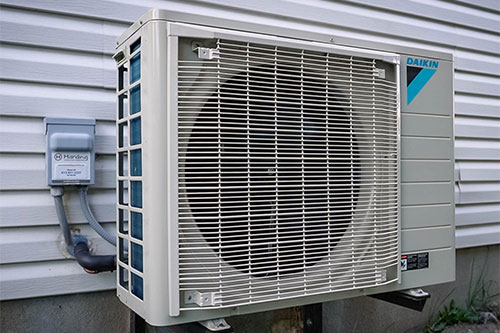
Technically, a heat pump is a mechanical-compression cycle refrigeration system that can be reversed to either heat or cool a controlled space. Installation for this type of system typically consists of two parts: an indoor unit called an air handler and an outdoor unit similar to a central air conditioner, but referred to as a heat pump. A compressor circulates refrigerant that absorbs and releases heat as it travels between the indoor and outdoor units.
How does a Heat Pump works?
Think of a heat pump as a heat transporter constantly moving warm air from one place to another, to where it’s needed or not needed, depending on the season. Even in air that’s seems too cold, heat energy is present. When it’s cold outside a heat pump extracts this outside heat and transfers it inside. When it’s warm outside, it reverses directions and acts like an air conditioner, removing heat from your home.
One advantage of a heat pump is that it moves heat instead of generating heat, giving you more energy efficiency. Also, it is powered by electricity, so you can save substantially on fuel consumption. For example, a Trane XL20i heat pump is among the HVAC industry’s most efficient, with a rating up to 19.00 SEER and 9.00 HSPF.
Note that heat pumps are best for moderate climates, and a supplemental heating source may be needed for lower temperatures. As a year-round solution for home comfort, Trane heat pumps can become a key part of your matched system. An independent Trane dealer can help you decide if a heat pump system is right for you.
Should I leave my pilot light on my fireplace throughout the entire summer?
This is a great question which gets asked all the time regarding gas fireplaces and gas inserts. The short answer is that it really depends on individual and what they are trying accomplish by either leaving it on or turning it off. There are functional reasons for asking the question, such as “will it hurt my fireplace if I do or don’t turn it off”, and then there are monetary reasons. It depends on what you want to know.
Here is some basic information about leaving the pilot on or off…
Pilot OFF:
- No gas is being wasted so you are conserving energy and saving money!
- No heat is being generated by the pilot so the glass door on your fireplace will not be warm to the touch. Just one less thing to worry about when it is HOT out.
- With the pilot off, there are still trace amounts of gas molecules in the burner and pilot tubes of your fireplace. The gas companies add a chemical called Mercaptan to the gas which gives it that lovely odor we all know. Spiders are attracted to the smell of the Mercaptan and will sometimes build webs in the pilot and burner tubes when the flow of gas is off. So when you go to turn on your fireplace in the early fall or late summer, it will not work, and you will have to call you local installer to come service the unit. This will cost money.
Pilot ON:
- On a cool night you can flip the fireplace on to take the chill out without having to re-light the pilot.
- No chance for a spider to make a web in one of the tubes and clog the burner
- If the pilot is left on for long stretches of time, without actually turning on the main burner of the fireplace, a white film can develop on the inside of the glass. This is sulfur based film and if left uncleaned could possibly etch itself into the glass. The sulfur is a bi-product of the burning pilot and it can build up over time on the glass. If you see this develop, refer to your user manual (or look it up online) to find out how to clean the glass or risk having that white haze there forever.
The big questions that people are usually wondering about is how much gas does it use. Really, it is “how much to it cost per month for the pilot to run?”
You need to understand that most Gas Fireplaces have pilot’s which use about 900-1100 BTU/hr. This is pretty powerful, and for good reason. The pilot must generate enough Millivolts of electricity to open and close the gas valve. This also means that it uses a fair amount of gas.
For a natural gas home, you pay for you gas by the Therm. A Therm = 100,000 BTU. So if you your pilot uses 1,000 BTU/hr and it is running for 24 hours a day, and 30 days a month, that comes out to be about 720,000 BTU. Divide that by 100,000 BTU to find the amount of Therms it uses (approximately 7.2). Then look at your gas bill and find out what you pay per Therm. Usually it is $1 and change. So you pilot can be costing you $7 to $10 per month.
Propane is a little bit different. Since propane is done by the gallon, the numbers are different. There are about 91,000 BTU in a gallon of propane. And the cost per gallon of propane is a lot higher than natural gas, floating somewhere around $3.05/gallon now. Doing the same math it would mean the pilot uses about 8 gallons of propane per month, which translates to about $24.00 in fuel cost.
Those are the facts to the best of my knowledge. For propane users, it seems to make sense to turn off the pilot light from a monetary point of view. Even if the pilot gets clogged while its off, it is a virtual wash in money having it serviced by a repair person. For natural gas customers it can really go either way.
How often should I have my fireplace serviced?
Gas Fireplaces need an annual inspection in order to keep up to snuff. This is a very important practice, which many overlook; myself included. Because gas fireplaces burn clean and are very easy to take care of, some assume that this means it doesn’t need cleaning. While it is true that gas fireplaces are both efficient and low maintenance, it’s a known fact that ANY appliance can become a nuisance if neglected. That is why you need an annual inspection of your gas fireplace. By cleaning your fireplace and chimney, you can put your mind at ease when you start your unit this season.
Every fireplace or insert should be cleaned annually. This is due to the hard work a fireplace puts in with each use, when it is heating your home. It‘s best to get your fireplace checked each spring; that way you will have a flawlessly functioning fireplace all year round, but whatever schedule is easiest for you will work for the fireplace too.
Debris and junk and all that gunk
Debris likes to hang out in the vents, in the flue and inside the chimney. This needs to be removed, as it will restrict airflow and might smell bad. Gas fireplace debris includes:
1. Deteriorating logs: Ceramic or faux log inserts can eventually deteriorate with use, clinging to the sides of the insert and getting trapped.
2. Dirty Glass doors or frame: Chipped or scratched glass can become a hazard over time. It can meddle with the heat output of your fireplace, and no one wants that. If this is the case, you will need to get it cleaned or replaced.
3. Residue: The inside and outside of a gas fireplace needs to be cleaned once in a while. Think about it, after all those gorgeous fires it’s bound to get a little dirty in there. It is very important to follow the manufacturer’s instructions, and use approved products for cleaning. Check with your technician, or a local dealer, to see if they offer cleaning services.
Remember: If you have a masonry fireplace with a gas log set insert, inspect the logs with every annual inspection.
What Happens during an inspection?
During an inspection, the technician will first take a look at the exterior. This includes making sure glass is not chipped, cracked, or dirty, and that the framework is holding up sufficiently. While checking for dents or debris, the technician will also look at the interior gas ignition under the log structure and make sure it is lighting flawlessly. They also make sure your log set is not deteriorating in any way. Often times, the face of the unit will to be taken off, so they can inspect the valves and connections underneath your fireplace or insert. They will make sure your fireplace’s heat output is correct, and clean up any residue that has started to block any ports or vents. After a routine check, your technician should make sure you have working carbon monoxide detectors, and that you are aware of any repairs your gas fireplace may need. Certified gas technicians have a wealth of information and will be happy to answer any questions you may have about your fireplace or insert, don’t be afraid to ask.
Just Flow With It.
Safety is always number one when it comes to enjoying a roaring fire in your living space. By having an annual inspection, you ensure that your beautiful fireplace is running at peak efficiency for whenever you need that glowing comfort or extra heat.
Schedule fireplace maintenance today! Our experts will take the time and the effort to make sure your fireplace is safe, working well, and looking good. If you’re looking for fireplace maintenance in Ottawa to prepare your home and your fireplace for the winter, look no further than Team Harding!
What is the right size furnace for my home?
Furnace Size can Affect Energy Efficiency
When buying new HVAC equipment, finding the proper air conditioner or furnace size for your home is one of the most important things to consider.
While this is important for new buyers, it’s also something homeowners with newer systems should be aware of in case they start to notice their system isn’t running efficiently.
The most common misconception for furnace and air conditioner size is that the bigger the system, the better it is. If you choose a furnace or air conditioner that is too powerful for your home, it will often use more energy than necessary by running short, inefficient cycles. This term is called “Short Cycling” and can even lead to damaged parts in your system, costing you even more in repair costs.
For the reverse, if you choose a system that is too small, it may not be able to keep up with your needs, forcing it to run extra-long cycles and again making itself vulnerable to part failures.
Keep in mind that the correct size system for your home isn’t entirely dependent on the size of your home. Your service provider should be experienced with installation in your local area and familiar with the climate. There are many other factors that your HVAC technician should take into account, including:
- The insulation and window quality of your home
- The number of occupants in your home
- If you’ll be renovating in the near future
- The direction that your home faces
- Objects surrounding your home such as trees or other buildings
The best way to determine if you are getting a properly sized system is to get a Team Harding professional to do a site visit at your home first. This will allow your home to be assessed properly.
Do I need a new furnace?
Replacing a furnace can be a fairly straightforward affair. You call a couple heating, ventilation and air conditioning companies (commonly referred to as HVAC companies) and they give you quotes to replace it.
That’s great if you know you need a new furnace because your current one has reached the end of its life. But what if your current furnace is still working fine. Will a new furnace help make your home more energy efficient or improve uncomfortable rooms? Here’s some advice to help you decide.
When replacing your furnace is an easy decision
A good rule of thumb is that if your furnace has a pilot light, or has a metal vent with a gap just above the furnace (see photo) then go ahead and replace it before winter.
Keep using your high efficiency furnace
If the label on the side of your furnace says that it’s greater than 90% efficient to start with, replace it when it dies since you already have a high efficiency furnace. You won’t save enough gas with a higher efficiency furnace to pay for the upgrade.
Determine how much money you can save money with a new furnace
If your furnace efficiency is below 90%, it’s useful to know how much you can lower your heating costs to determine if you should replace your furnace right away or if you could wait. You’ll want to determine if you can save enough money in fuel costs to justify replacing the upgrade.
- Start with your yearly gas bill to figure out much how much you’re paying for the natural gas used to heat your hot water for the whole year.
Most people use about the same amount of hot water for showering, dish washing, and washing clothes all year round, so you need to figure out how much natural gas you use monthly to heat water.
- Look up your bill for a warm weather month when you were home with the furnace off but not frequently using a natural gas barbeque.
- Take that monthly amount and multiply it by 12 to get your yearly cost to heat water.
- Then subtract your water heating costs from what you paid over the year for natural gas.
- Take your resulting number and multiply it by your furnace efficiency. It’s usually listed on the side of your furnace (or boiler). Turn it into a decimal. If your furnace it 83% efficient, it would be .83.
That number you have is the absolute minimum cost for a fuel-fired appliance (for example natural gas or propane) if it were 100% efficient.
- You can then reuse the formula with your new furnace options.
- Use results of Step 6 to calculate your savings by replacing your furnace with each option.
Taking time to do this math can help you determine if the savings on your fuel costs are enough to upgrade your furnace.
What if you have uncomfortable rooms?
If you have rooms that are uncomfortably warm or cold, first check to make sure that all the vents in the house are open. Then take some time to “balance” the house. Open vents in rooms that are used and close the ones in rooms that are not used. If you had to adjust more than a couple, give the house a day or two to settle in to its new temperature profile.
The vents might also have a little circular adjustment plate inside the duct. Some are accessible from the vent, and some are accessible on the main duct coming out of the furnace in the basement. If your home has them, you can try using them to adjust air flow.
If there are still rooms that are uncomfortable, the next step would be to tape up wherever there is a takeoff from the main duct such as to take air upstairs.
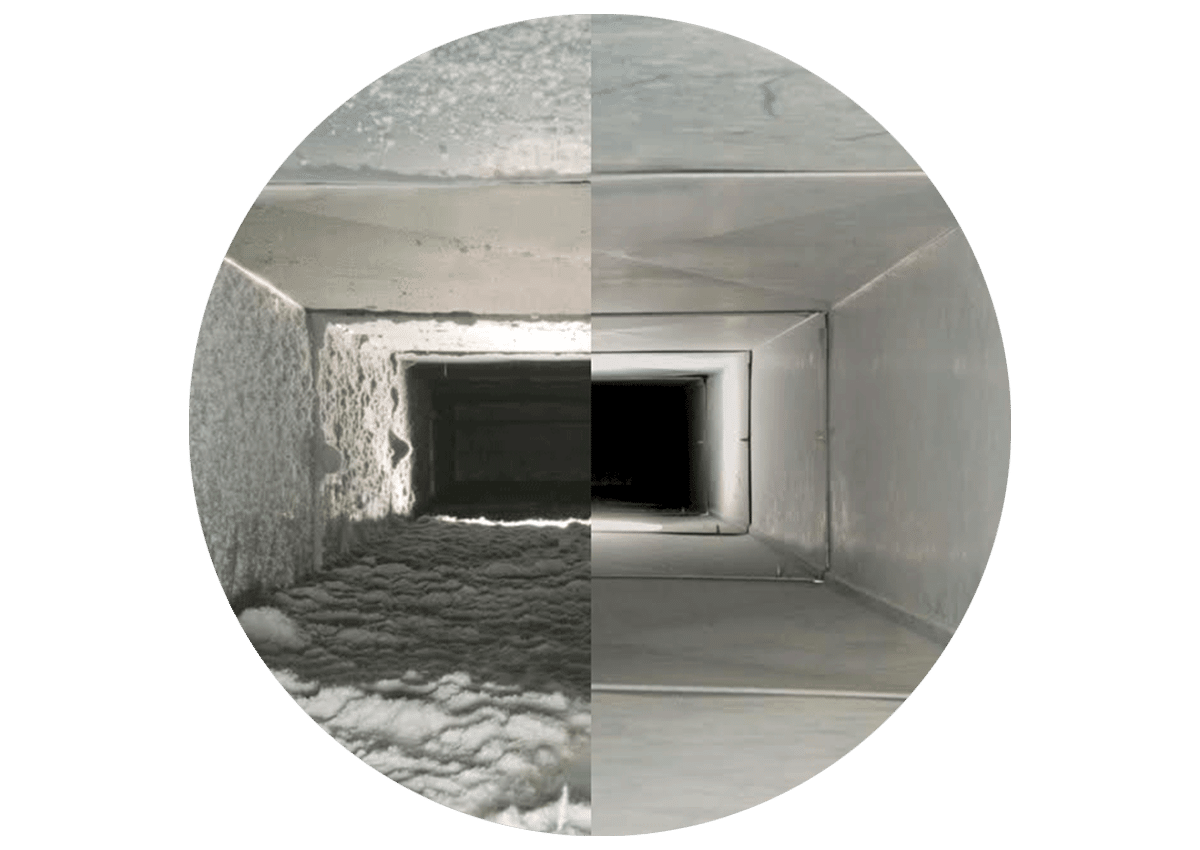
The duct is probably pretty dirty, so clean it first so the dust doesn’t prevent the tape from sticking. Then use a high-quality aluminized tape to seal around each takeoff.
Another option – though it isn’t the most efficient option – would be to run your furnace fan continuously instead of on auto. But doing so means using electricity and it decreases the time until the motor needs to be replaced.
Some people will have settings on their vent cover’s diffuser to tell them what setting to choose for summer vs winter. Your basement for instance, will rarely need any air conditioning in the summer, so all the vents should be closed. However, it will probably need to be open for full heating in the winter.
You might need to change your water heater too
If you have an exterior chimney and a water heater that is vented into the chimney, you should replace your water heater with a sealed-combustion unit at the same time that you are doing the furnace replacement. Otherwise, the chimney can cool down when there’s no longer the furnace venting through it, and the venting from the water heater could possibly backdraft and let combustion products into the home and potentially lead to carbon monoxide poisoning.
You can do so fairly inexpensively, if like most people, you rent your water heater. If for some reason you can’t replace your water heater at the same time, ensure you have carbon monoxide detectors in your home. Everyone needs to have these detectors according to a fairly recent law.
What if you don’t need a new furnace?
If your home gets uncomfortably cold but you don’t need a new furnace and you’ve explored the other options I’ve suggested to improve uncomfortable rooms, you should get a home energy evaluation to help you develop a game plan to make your home energy efficient and comfortable.
Cooling
When should I be covering my air conditioner?
We get asked a lot of seasonal air conditioning questions at All Systems Mechanical. As you might imagine, the advice for air conditioning near Santa Clarita is a bit different from what you might expect up in Bozeman, Montana. We often get asked the question, “should you cover your air conditioner in the winter?” To be honest, the real answer depends on what part of the country you live in, but if you have read some of our posts, then you know that we are a small, U.S. Veteran-Owned heating and air conditioning company, and take pride in the fact that we don’t mince words. So, to avoid disappointment the answer to your question is, probably not. It probably is not necessary to cover your air conditioner in the winter, or during any other time of the year, for that matter. But for those who are not easily satisfied, this article will address the reasons why it is not necessary to cover your air conditioner in the winter, the few occasions in which it might be a good idea to drag out a cover, and how to cover your air conditioner if needed.
Why it is Not Important to Cover Your Air Conditioner in the Winter.
There are a couple of reasons that it is not that important to cover your air conditioner, even in the winter. The most important reason is that it is not really necessary. Here’s why: what you might not realize is that all outdoor HVAC equipment is made to withstand harsh weather conditions and varying temperature extremes. That is what they are made for, and is actually part of the reason that your air conditioner is so damned expensive.
All of the parts and materials used are designed to stand up to hot summers and harsh winters. There are some caveats to this, of course, and those will be addressed in the next section. It should suffice to say, that no major manufacturer that I know of (i.e. Carrier, Lennox, etc.) specifically recommends that you cover your air conditioner in the winter.
To verify, we went ahead and gave a few of the major air conditioning companies a call to see what their take was on whether or not you should cover your air conditioner in the winter. Upon calling their customer service departments, they also said that there was no specific instance in which they would recommend that you cover your AC unit for the winter. Think about it – you’d better believe that if covering your air conditioner in the winter was making a significant difference in the longevity of your air conditioning unit, then the major companies would not only recommend it, but they’d probably provide you with a cover as part of your purchase.
There are a couple of other reasons that it is not desirable to cover your air conditioning unit, many of which might not be that obvious to you:
1. Rodents Can Infest Covered Air Conditioners
Rodents and other animals seek shelter from harsh winters and will often start to inhabit a covered air conditioner. This can lead to secondary problems like chewed electrical wires and un-insulated Freon lines due to the rodents stripping them to make a nest.
2. Mold and Mildew Can Grow Inside, if You Cover Your Air Conditioner in the Winter.
Mold can accumulate in the spring months before the air conditioner is uncovered due to the increased moisture inside. Your air conditioner is made to be open to the air. Covering your air conditioner will block proper air flow which can lead to mold growth on your evaporator coils. While mold growing outside of your home is not detrimental to your health the way that it is inside of your house, it can block proper airflow through your coils and decrease your air conditioner’s efficiency. For more information, try: How Do You Prevent Mold?
3. Covering Your AC Doesn’t Prevent Moisture From Infiltrating Your AC Unit
Probably the biggest argument that can be made for why you should cover your air conditioner in the winter has to do with water. If water accumulates on your air conditioners external coils (called condenser coils) and then freezes, it runs the possibility of damaging your coils over time.
Although this is a valid argument, the problem is that covering your air conditioner doesn’t really solve this problem. Moisture will get in and accumulate either from humidity that is naturally in the air, or from wind blowing it in. As the water on the ground evaporates, it can also find it’s way in. The bottom line is that covering your air conditioner doesn’t do a very good job of keeping moisture out of your unit. It will find its way in eventually.
When Should You Cover Your Air Conditioner?
Cover Your Air Conditioner for Hail Storms
If you live in Santa Clarita, then it is not really necessary to cover your air conditioner – ever. But for those of you who are up north, it might be worthwhile to cover your air conditioner under some circumstances. For instance, it is not uncommon in the midwest to encounter hail. Although it is not possible to predict, if you know that a large convective storm is coming, give some though to covering your air conditioner before the thunderstorm gets there (key word being before, not during the storm – stay inside).
Cover Your Air Conditioner for Blizzards
The same advice should be used for those that live up in the north – if you know that a blizzard is headed your way, then take a few minutes to cover your air conditioner. Keeping the excess snow out of your air conditioner can help quite a bit, specifically if the temperature warms up to above freezing temperatures during the day, then drops below freezing at night. If the snow accumulates inside of your air conditioner, then melts and refreezes, you are essentially making a mini glacier inside of your air conditioner which can damage your coils. Cover your air conditioner before a blizzard, and uncover it right after. Take a few moments to remove the snow right around the outside of your unit and it will pay dividends in the long run.
As a general rule of thumb, I’d offer the following advice: imagine your old diesel truck – if the weather is bad enough that you would worry about your old diesel, then it’s time to cover your air conditioner. If your diesel could handle it, then you’re AC is all set.
How Do You Cover Your Air Conditioner?
Like we discussed above, unless you live in extreme weather, it isn’t really important that you take the time to cover your air conditioner in the winter. However, if you do, there are a couple of ways to do it.
The first way is to use a large tarp and wrap your air conditioner using rope and duct tape. This, as you might imagine, can take 15 minutes each time that you do it. It’s not worth it. The second way, is to go online and buy an air conditioner cover. They are relatively cheap, and range from around $25 to $35. If you are going to go to the trouble of covering your air conditioner in the winter, then you might as well do it right.
Can frost, ice, dirt or other debris keep the outdoor unit of my cooling system from operating effectively?
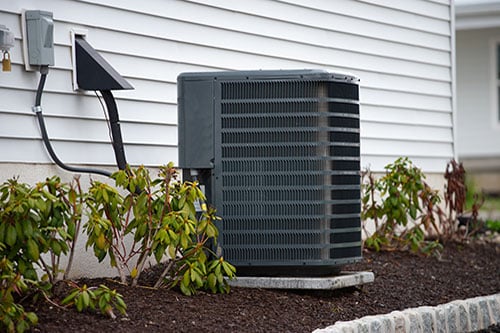
Anything that prevents airflow from making its way to the outdoor coil can negatively affect the efficiency and performance of the equipment. Make it a priority to keep the space around the equipment clean and clear.
If you’re like most people, you have some general HVAC service questions you’d like to ask a technician. One of the most common questions is whether or not debris and other factors can affect the operation of the outdoor unit of your cooling system. Here’s what you need to know:
Frost and Ice
It’s common, and normal, for frost and ice to form on the outside unit of your HVAC system in the winter. There is a defrost control built into the unit that will activate if it senses frost or ice. If there is ice on your air conditioning system during the summer, it means there is something wrong with the unit such as a leak or low refrigerant. This will compromise the performance of the unit and requires a service call from a certified technician.
Dirt and Debris
It’s common to find dirt and debris on the outside unit of a cooling system. Wind, rain, and other weather can blow dirt, dust, sticks, leaves, and other debris onto and into the unit. While the units are designed to stand up to the weather, debris blown into the unit can cause damage and can keep the unit from operating efficiently. Keep the unit clear of debris when possible, but if you notice any dirt inside the unit or if you see that your system doesn’t seem to be functioning as well as it should have a professional look at it.
If you see any frost, ice, dirt, or debris on your outdoor cooling unit, it’s possible it could affect the operation of your air conditioner.
How does an air conditioner work?
An air conditioner seems as if it cools your home’s air, but it actually makes your home less warm by removing heat from the indoor air and transferring that heat to the outdoor air.
Heat is extracted from the home by passing indoor air across a refrigerant coil in the indoor unit. Refrigerant lines then carry the heat to the outdoor unit, where it is released into the outside air. The cooling cycle continues until the indoor temperature reaches the thermostat setting.
The first modern air conditioning system was developed in 1902 by a young electrical engineer named Willis Haviland Carrier. It was designed to solve a humidity problem at the Sackett-Wilhelms Lithographing and Publishing Company in Brooklyn, N.Y. Paper stock at the plant would sometimes absorb moisture from the warm summer air, making it difficult to apply the layered inking techniques of the time. Carrier treated the air inside the building by blowing it across chilled pipes. The air cooled as it passed across the cold pipes, and since cool air can’t carry as much moisture as warm air, the process reduced the humidity in the plant and stabilized the moisture content of the paper. Reducing the humidity also had the side benefit of lowering the air temperature — and a new technology was born.
The actual process air conditioners use to reduce the ambient air temperature in a room is based on a very simple scientific principle. The rest is achieved with the application of a few clever mechanical techniques. Actually, an air conditioner is very similar to another appliance in your home — the refrigerator. Air conditioners don’t have the exterior housing a refrigerator relies on to insulate its cold box. Instead, the walls in your home keep cold air in and hot air out.
Let’s move on to the next stage where we’ll discover what happens to all that hot air when you use your air conditioner.
Air conditioners use refrigeration to chill indoor air, taking advantage of a remarkable physical law: When a liquid converts to a gas (in a process called phase conversion), it absorbs heat. Air conditioners exploit this feature of phase conversion by forcing special chemical compounds to evaporate and condense over and over again in a closed system of coils.
The compounds involved are refrigerants that have properties enabling them to change at relatively low temperatures. Air conditioners also contain fans that move warm interior air over these cold, refrigerant-filled coils. In fact, central air conditioners have a whole system of ducts designed to funnel air to and from these serpentine, air-chilling coils.
When hot air flows over the cold, low-pressure evaporator coils, the refrigerant inside absorbs heat as it changes from a liquid to a gaseous state. To keep cooling efficiently, the air conditioner has to convert the refrigerant gas back to a liquid again. To do that, a compressor puts the gas under high pressure, a process that creates unwanted heat. All the extra heat created by compressing the gas is then evacuated to the outdoors with the help of a second set of coils called condenser coils, and a second fan. As the gas cools, it changes back to a liquid, and the process starts all over again. Think of it as an endless, elegant cycle: liquid refrigerant, phase conversion to a gas/ heat absorption, compression and phase transition back to a liquid again.
It’s easy to see that there are two distinct things going on in an air conditioner. Refrigerant is chilling the indoor air, and the resulting gas is being continually compressed and cooled for conversion back to a liquid again. On the next page, we’ll look at how the different parts of an air conditioner work to make all that possible.
What is variable speed technology and how does it apply to air conditioners?
“Variable speed” refers to the fan motor inside the air handler—the indoor part of an air conditioner that moves cooled or heated air throughout the ductwork of your home. An air handler is usually a furnace or a blower coil.
Unlike conventional single-speed motors, a variable speed motor runs at a wide range of speeds to precisely control of heated and cooled air throughout the home. Better airflow control has several benefits:
Electrical efficiency
Variable speed motors can actually save you money on your energy bills, as they consume less electricity than standard motors.
Cooling efficiency
Variable speed technology also means you will gain air conditioning efficiency or SEER.
Zoning
Variable speed motors are excellent for zoning, which allows you to customize your comfort in different areas of your home and control your energy bills.
Air quality
A variable speed motor can also help clean the air in your home. When the fan is in constant operation (indicated by the “Fan” setting on your thermostat), the motor will continue to slowly circulate air, allowing filters to capture more contaminants.
Humidity control
A variable speed motor combined with a ComfortSense® Thermostat allows you to control the amount of humidity in your home for improved indoor air quality and comfort.
Why is my system freezing up?
There are several factors that can cause system freezing. Most need to be corrected by contacting Team Harding Comfort.
One thing you can do to prevent or correct this problem is to make sure the filter is clean or replaced. You can check to see if airflow is restricted.
Dirty filter
After replacing or cleaning the, you can speed up the thawing process by turning the system off and turning on the fan. If you have a heat pump system, you can try turning the system to heating mode until the ice has melted. After the ice has melted, switch the system settings back to normal. If the system refreezes, contact Team Harding Comfort to correct the problem.
Low refrigerant
In some cases, freezing is caused by a leak in the refrigerant lines. Weak solder joints, friction from piping rubbing or vibrating against an object, open valves or loose fittings are all factors that can cause leaks. When determining whether to have the system repaired or replaced, the age of the system and the nature and location of the leak are important considerations.
Dirty evaporator coil
Over time, the evaporator coil will become dirty. When this happens, you will begin to lose airflow, slowly enough that you probably would not realize it until it freezes up or cooling performance is compromised. At this point, you will need to contact Team Harding Comfort to correct the problem.
Defective blower motor or relay
A blower motor not running at the proper speed or not running at all is another factor that can cause freezing. Motor operation may be intermittent, starting at full speed and slowing down after it heats up. Or, a relay could cause it to start one time and not the next. In either case, you will need to contact Team Harding Comfort to correct the problem.
What is the average life expectancy of an air conditioning system?
Whenever we install a new heating/cooling system we are always asked the same question: “How long will it last?”. The simple answer: it depends on how well you maintain it. Every manufacturer makes their system slightly different than another and one part could last longer than another. For example, if a manufacturer produces systems that have poor quality compressors, then the overall life expectancy could drop significantly because compressors are sometimes more expensive to replace than the system itself.
Here is a chart which outlines the average life expectancy of HVAC systems based on how much maintenance you use, national averages, and plain old estimates. Please keep in mind that these are estimates, not guarantees. Your brand could result in higher or lower life expectancies.
Maintenance Items:
- Changing filter regularly (1-3 months)
- Getting tune-ups/servicing seasonally
- Remove debris from outside unit
- Checking on and replacing refrigerant insulation as necessary
| No Maintenance (0 items) | Little Maintenance (1-2 Items) | Some Maintenance (2-3 Items) | High Maintenance (4 items) |
| 15-18 years | 18-20 years | 20-25 years | 25+ years |
Exclusions
The above chart is for your average central AC/heating system; however, if you still use oil burners, wood stoves, or other forms of heat, then your numbers are significantly different.
Oil-based furnaces generally only last a few years and require a lot of maintenance to keep them running. As an older system, it can last a few years and they are not too expensive, making it a popular item among some people.
Geothermal systems are also not included in the above chart. These systems generally last around 30+ years. If maintained well enough, the system may be there longer than you!
Boilers mostly follow the above chart, except they last slightly longer (by 1-3 years) than other average systems.
Additional features/accessories are not included as well, such as:
- Humidifiers (8-10 years)
- Dehumidifiers (8-10 years)
- Thermostats (35-40 years)
- Ventilation/duct-work (8-10 years)
- Insulation (100 years)
Average Life Expectancy
Most organizations and companies can agree that homeowners can see between 15-25 years in their system’s lifetime. Some places will say 15, others 20, and still others say 25. The truth of the matter is the system lasts as long as you want it to. As long as you maintain the system well and have regular tune-ups/servicing, you’ll find your system lasts a very long time. Many homeowners decide to replace it after about 10-15 years for a new, more efficient model. In the long-run, replacing the system every 15-20 years (most systems’ average life expectancy) is more economical in terms of maintenance fees and energy bills.
Can homeowners repair their own air conditioners?
In most cases, definitely not. Cooling systems today are more complicated to service and usually require expert attention in order to comply with federal regulations, such as the Clean Air Act which prohibits releasing refrigerants into the atmosphere. An EPA-certified air conditioning contractor or service technician should be called at the first sign of trouble.
Performing DIY HVAC repair can not only cost you money in the long run by having experts fix what damage you may have caused, but it also voids your AC warranty, shortens the lifespan of your system, and puts yours and your household’s health and safety at risk.
Indoor Air Quality
General
What can I do myself to enhance my home’s air quality?
There is a common belief that the air outside your front door is much worse to breathe than the air inside your home. But, as studies show, the air inside your home may also come with health implications. How did your indoor air get dirtier than your laundry? Think of fumes off-gassed by furniture, paint and building materials, chemicals from household cleaning products and fragrances, combustion devises, dust, bacteria and mold. These are all common culprits of poor home air quality.
When you consider that we spend most of our time indoors, this is a big problem. But it can be especially debilitating for those who suffer from allergies or asthma. Here are some simple solutions to improve your home air quality—many of which are quick, easy and affordable.
Tip#1: Air it out
Open a window to air out harmful chemicals and let cleaner, healthier air in! Even if it’s for a few minutes a day, it’s one of the simplest (and most affordable) things you can do to improve your home air quality. You can also turn on a ceiling or portable fan while windows are open to recirculate household air and push out stale air.
Tip #2: Use non-toxic household cleaning products
Traditional household cleaning products are one of the leading contributors to poor home air quality. Your home is not a science experiment. Rather than spend money on household cleaning products, look no further than your pantry for ingredients that possess natural cleaning prowess. Ingredients such as baking soda, white distilled vinegar, lemon juice, olive oil, tea tree oil, hot water, coarse salt, and castile soap all do a bang-up job without spewing harmful chemicals in your home.
If you prefer something in a bottle, don’t just trust what they tell you on the label. Do some research before you buy. Look for products that tap into plant-based ingredients for cleaning power without artificial dyes and/or fragrances to better your home air quality. And remember, traditionally, the fewer ingredients on the label, the better.
Read more about making your own natural cleaners
Tip #3: Invest in healthy houseplants
Believe it or not, there are some plants that act as renegade air filters by sucking up harmful chemicals that rest in your air and pumping out fresh oxygen. Not just any plant will do. A study conducted in part by NASA found that a handful of plants are particularly skilled at eating up some of the more harmful chemicals: formaldehyde, benzene and carbon monoxide to name a few. Here are a few of the top plants that proved to be most effective at removing harmful chemicals:
• Bamboo Palm – Dypsis lutescens
• English Ivy – Hedera helix
• Gerbera Daisy – Gerbera jamesonii
• Janet Craig Dracaena – Dracaena deremensis ‘Janet Craig’
• Red Edged Dracaena – Dracaena marginata
• Mass cane/Corn Plant – Dracaena massangeana
• Warneckii Dracaena – Dracaena deremensis ‘Warneckii’
• Mother-in-Law’s Tongue – Sansevieria laurenti
• Pot Mum – Chrysantheium morifolium
• Peace Lily – Spathiphyllum species
Tip #4: Skip the scent
We are all guilty of associating fresh, aromatic scents with a clean home, but synthetic fragrance found in air fresheners, household cleaning products, detergents and candles infuses your air with harmful chemicals. Since the actual components of a fragrance are considered a “trade secret,” companies are only required to list the catch-all term “fragrance” on the label—but they are not required to disclose what they actually are4. In this case, the devil is in the details. A study conducted by Washington University found that nearly 100 volatile organic chemicals (VOCs) were emitted from six popular air fresheners. Of the 100 VOCs emitted, none were listed on the label and five of them released at least one (or more!) cancer-causing chemicals. Many fragrances have not been tested for human safety, and a group of plasticizers known as phthalates are commonly used to make the scent last longer. Phthalates have been linked to hormone disruption, cancer, and reproductive and developmental issues.
To protect your home air quality, look for household cleaning products, detergents and aerosol sprays that are fragrance-free or scented with 100 percent natural ingredients. You can also use essential oils, lemons, or baking soda to freshen up your home. Check out these recipes.
Tip #5: Buy safer furniture
Your furniture can off-gas VOCs, which can be highly toxic to human health. Conventional woods in furniture such as plywood and particleboard are fused with toxic glues that can contain formaldehyde and harmful chemicals, and are finished with paints, lacquers, and varnishes that contain even more harmful chemicals. These chemicals can be detrimental to those with allergies and asthma, while contributing to serious diseases like cancer. If you can, avoid buying furniture made from woods that have been treated with formaldehyde and look for furniture that was assembled with non-toxic glues and water-based or low to no-VOC finishes. Certifications like GREENGUARD also serve as a great guide by identifying products that have lower chemical emissions for better home air quality. Since healthier furniture can be more expensive, you can always buy second-hand—a good indication that the furniture has already done most of its off-gassing. You can also open a window for better air ventilation (See Tip #1).
Tip #6: Be picky about paint
Are you familiar with that funny odor that fills the room after you have freshly painted the walls? It makes you dizzy for a reason. Conventional paints can emit toxic fumes into your home over its life cycle . Look for safer paints that are labeled “Zero VOC or “Low-VOC.” The most ideal option is “Zero VOC, no toxics and no solvents,” which states that the canister of wall color does not contain any of the harmful chemicals found in traditional paints.
Tip #7: Invest in a HEPA filter vacuum
Carpets and floors can harbor chemicals and commons allergens, which accumulate in household dust. Vacuuming a few times a week is key, but cheap vacuums can just make matters worse. The problem with cheap vacuums is that they suction chemicals in, and then spew them back out in the exhaust to exacerbate poor home air quality. Purchase a vacuum with a true HEPA filter, which is capable of suctioning up dust, dirt and even the smallest irritants.
What are the benefits of clean air?
Allergies and asthma are two health problems that can be helped with clean indoor air. When airborne irritants are removed, allergy and asthma sufferers often find relief from their symptoms. Even healthy people who have never suffered from allergies can benefit from clean air. Dust, smoke and other particles float around in the air, causing your drapes and furniture to gather dust. By removing airborne dust particles, you reduce the amount of exposure your respiratory system has to them.
Carbon Monoxide
Should I be concerned about carbon monoxide in my home?
Carbon monoxide can be an invisible threat to your family’s health and safety. Though more commonly associated with fires and automobile emissions, carbon monoxide poisoning can accumulate in any home unless certain precautions are taken.
Home heating systems represent only 5% of potential carbon monoxide sources. Though the amount of carbon monoxide produced is not substantial, it is important to schedule annual maintenance visits by a qualified technician to make sure all combustion appliances are operating properly and all chimneys and vents are free from obstruction.
What is carbon monoxide?
Carbon monoxide can be an invisible threat to your family’s health and safety. Though more commonly associated with fires and automobile emissions, carbon monoxide poisoning can accumulate in any home unless certain precautions are taken.
Home heating systems represent only 5% of potential carbon monoxide sources. Though the amount of carbon monoxide produced is not substantial, it is important to schedule annual maintenance visits by a qualified technician to make sure all combustion appliances are operating properly and all chimneys and vents are free from obstruction.
What are some of the symptoms of carbon monoxide poisoning?
Signs and symptoms of carbon monoxide poisoning may include:
- Dull headache
- Weakness
- Dizziness
- Nausea or vomiting
- Shortness of breath
- Confusion
- Blurred vision
- Loss of consciousness
Carbon monoxide poisoning can be especially dangerous for people who are sleeping or intoxicated. People may have irreversible brain damage or even be killed before anyone realizes there’s a problem.
When to see a doctor
The warning signs of carbon monoxide poisoning can be subtle. But the condition is a life-threatening medical emergency. If you think you or someone you’re with may have carbon monoxide poisoning, get into fresh air and seek emergency medical care.
What can be done about detecting carbon monoxide in the home?
Carbon monoxide (CO) is a highly poisonous gas that can be fatal if inhaled in large amounts. You can’t see or smell carbon monoxide gas, which makes it even more dangerous. Carbon monoxide can infiltrate your home without you ever knowing until symptoms strike.
The longer and more significant a person’s exposure to carbon monoxide, the more severe the symptoms can become, ultimately leading to death.
Carbon Monoxide in the Home
A malfunctioning or inappropriately used heating, cooking, or ventilation system in the home can allow leakage of carbon monoxide gas into the air, leaving you breathing toxic gas without knowing it.
Carbon monoxide can come from a number of sources within the home:
- Furnace systems and chimneys with leaks
- Kerosene heaters
- Wood-burning stoves and fireplaces
- Gas ranges
- Generators
- Appliances fueled by gasoline
- Gas-fueled space heaters
- Fireplaces that aren’t vented
- Cigarette and pipe smoke
Carbon Monoxide and Your Health
When carbon monoxide gas contaminates the air, you breathe in more carbon monoxide than oxygen. Once it enters the body, carbon monoxide gets into the blood, where it takes the place of oxygen; this happens most notably in vital organs like the brain and heart, which then become oxygen-deprived.
The first symptoms of carbon monoxide poisoning include:
- Chest tightness or shortness of breath
- Tiredness
- Nausea
- Confusion
- Headaches
- Dizziness
How carbon monoxide affects your health depends on the amount of carbon monoxide exposure and on how long the exposure lasts. Carbon monoxide poisoning may cause some of the immediate short-term effects noted above, but it can quickly turn serious, with nausea, vomiting, and loss of muscle coordination coming next. Inhaling high quantities of carbon monoxide can quickly lead to unconsciousness and suffocation.
Preventing Carbon Monoxide Poisoning
A carbon monoxide detector is a must for any home and just as important as a smoke detector. CO detectors should be placed near all bedrooms; they’re the only way you will know if carbon monoxide is affecting the air quality in your home, and can help prevent serious illness and even death.
Follow all the manufacturer’s directions, including how often the unit needs replacing, and always make sure there’s a UL (Underwriters Laboratories) certification tag on the model you buy. Unfortunately, not all carbon monoxide detectors are 100 percent effective — some brands did well during independent testing, and others didn’t. Investigate models before you buy to choose one that rated highest in tests.
If you experience any carbon monoxide poisoning symptoms, even if the detector alarm hasn’t sounded, get everyone out of your house into fresh air immediately.
According to the U.S. Environmental Protection Agency, using a carbon monoxide detector is only a part of effective prevention. Also be sure all fuel-burning appliances get regular maintenance and are working properly. To reduce the risk of carbon monoxide in your home, follow these tips:
- Always open the flue when using a fireplace.
- Never leave your car turned on in the garage; for instance, if you warm it up before driving in the winter, do it outside.
- Be cautious using wood-burning stoves: Make sure they are certified by the U.S. Environmental Protection Agency, and that the doors close tightly.
- Use appropriate fuel in kerosene heaters.
- Keep all gas appliances in your home working properly and inspect them often.
- Have your furnace and entire heating system inspected and cleaned each year by a professional.
- Never use gasoline-powered machines or charcoal grills indoors.
- Quickly repair any leaks in your central heating system.
It’s important to take these safety precautions to make sure that you keep carbon monoxide out of your home. Carbon monoxide monitors, used in conjunction with preventive safety tips, can help you keep you and your family safe from carbon monoxide poisoning.
Ventilation
How can I ventilate my home without losing energy?
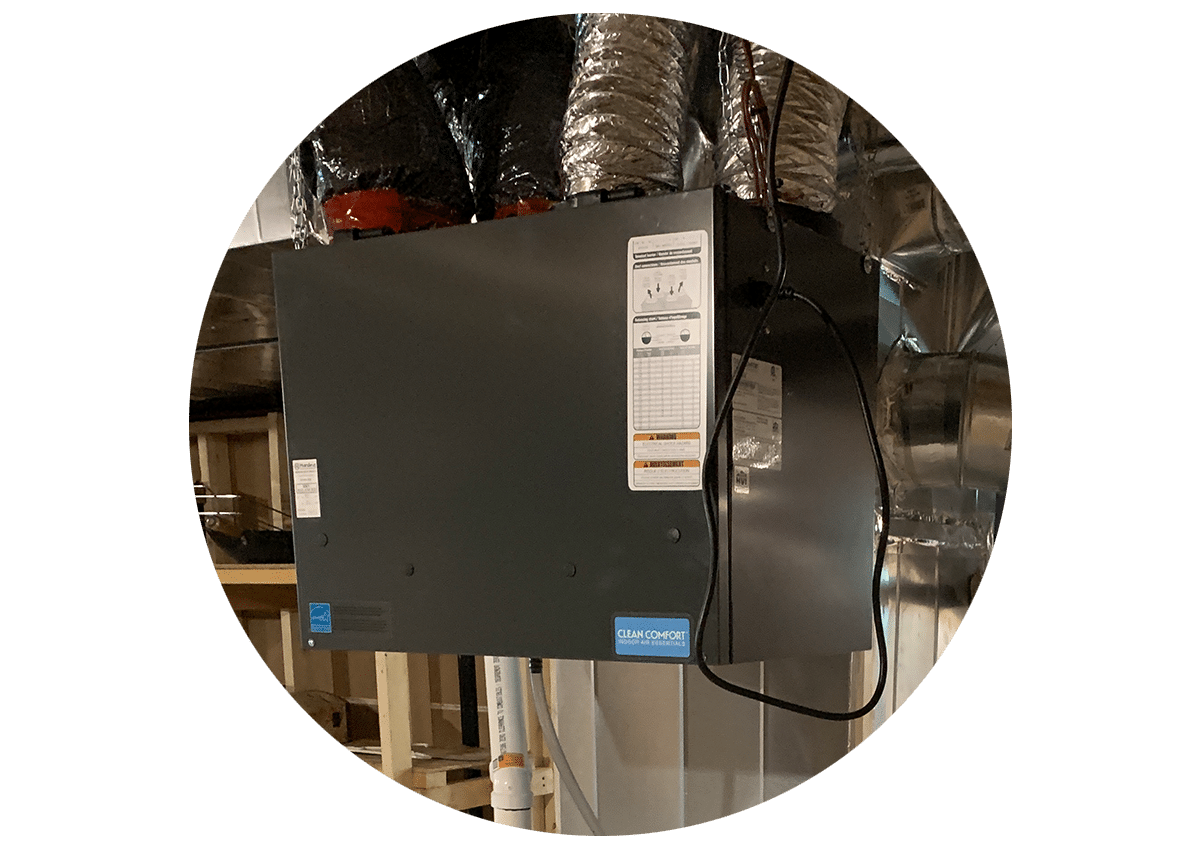
It is now possible to exchange stale indoor air with fresh outdoor air without compromising the energy efficiency of your home. Heat recovery ventilators (HRVs) and energy recovery ventilators (ERVs) exchanging stale, recirculated indoor air with fresh, filtered outside air, and no energy is wasted.
HRVs and ERVs are electronically powered units that circulate air throughout your home using the existing forced-air system or specially installed ducts. These units pump stale air out of your home and replace it with an equal volume of fresh outside air. An HRV is a compact unit that conditions the temperature of the outside air, while an ERV is a packaged unit that conditions both the temperature and humidity of the outside air. Because these units condition the air before it enters the home, your energy costs remain stable.
The Lennox Healthy Climate® Collection includes ventilation products that make it possible to bring fresh outdoor air into the home, without leaving windows open. Heat-recovery ventilators (HRVs) and energy-recovery (or enthalpy-recovery) ventilators (ERVs) exchange stale, recirculated indoor air with fresher outside air, and no energy is wasted.
HRVs and ERVs are electronically powered units that circulate air throughout your home using the existing forced-air system or specially installed ducts. These units pump stale air out of your home and replace it with an equal volume of fresher outside air.
Generally recommended for colder climates, an HRV uses heat from the outgoing stale air to warm up fresher air coming into your home from outside. Ideal for climates with high outdoor humidity, an ERV is similar to an HRV, but it removes excess moisture from the air coming in from outside.
Why is ventilation important for proper indoor air quality?
At one time, it was possible to achieve natural ventilation in our homes by simply opening a window. However, with growing concerns about rising energy costs, we have been busy making homes “tighter” from an efficiency standpoint. Armed with weather stripping and caulk guns, we have eliminated air leaks from our homes. Unfortunately, that means contaminants have no way to escape.
Pollutants in your home’s air can cause poor indoor air quality, which in turn may cause dizziness and headaches, plus aggravate allergies and asthma. That’s why Lennox offers ventilation systems that help remove contaminants by exchanging stale, recirculated indoor air with fresh, filtered outside air.
Humidity
What are benefits of installing a whole-house humidifier?
With central heating, people are confined indoors with unnaturally dry air for many months each year. Humidifiers help to keep comfortable levels of moisture in the air, which is essential for your respiratory health.
Whole-home humidifiers work like old-fashioned room humidifiers: They put moisture into the air, making harsh, dry air easier to breathe. A major difference is that they improve the air in every room of your home—no more carrying a humidifier from room to room in the winter.
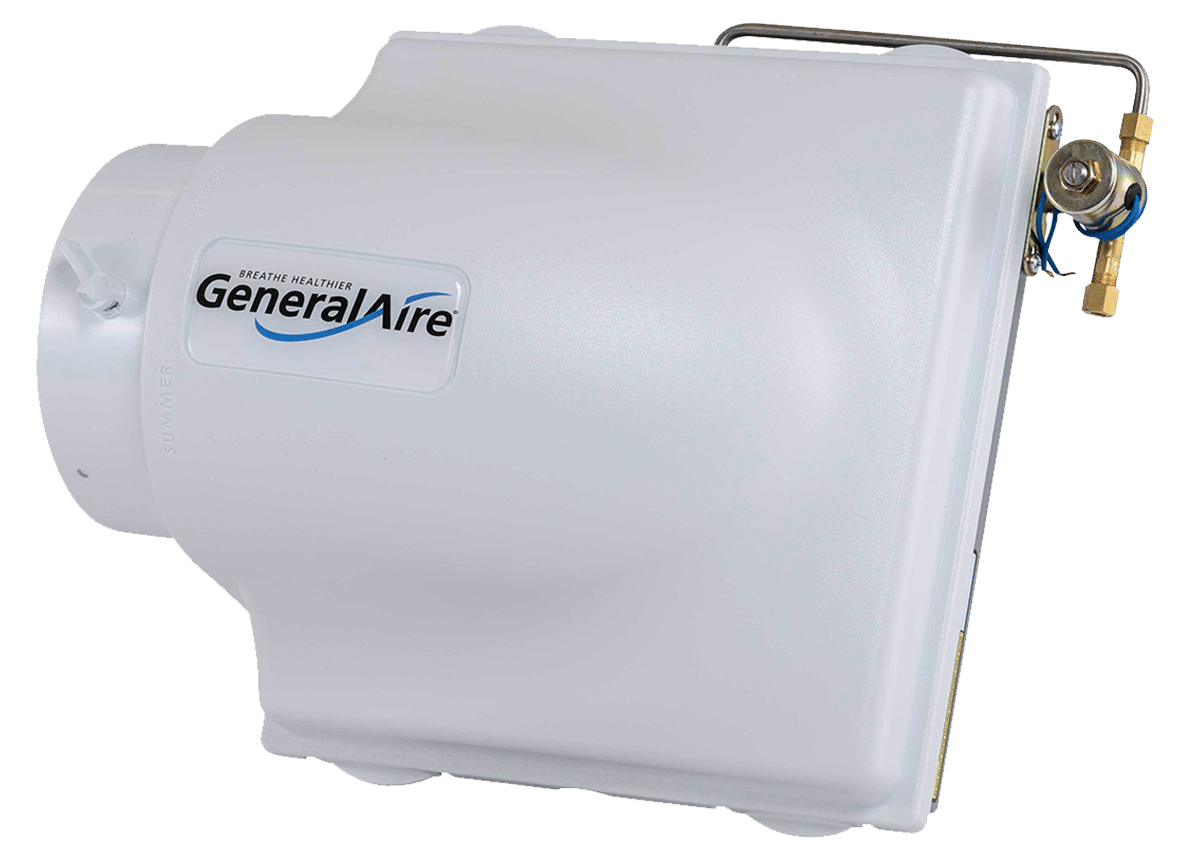
What is involved in humidifier installation and maintenance?
Installing a humidifier is simple if you are replacing your furnace. But you can also have a humidifier fitted to your current system with minimal labor, since it is designed for installation in your ductwork. It is also important to properly maintain your humidifier to avoid potential bacterial growth. Periodic cleaning and draining of the reservoir is strongly recommended.
Miscellaneous
What kind of filters should I be using and how often should they be replaced?
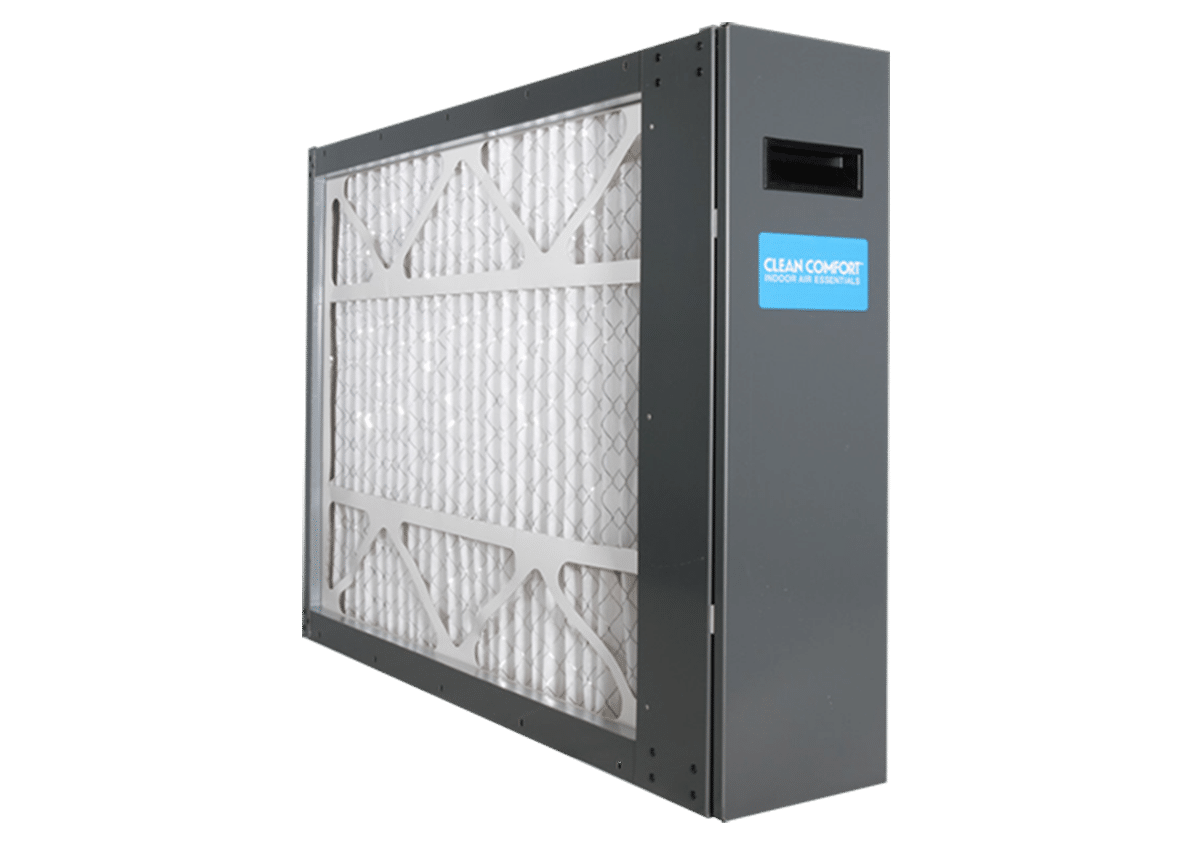
With the many advances in technology, homeowners have a lot more choices in energy-efficient equipment and accessories. Even something as simple as air filters come in many varieties. Here are the some of the types of air filters you may be able to use for your HVAC equipment.
- Economy panel filters – These come in a pack of four or five and are relatively inexpensive. The downside is that you get what you pay for. These filters simply do not filter much at all and you will probably be replacing them once a month as well.
- Pleated filters – Pleated filters, which can last from three to six months, are from 10% to 60% more efficient than conventional AC filters.
- Electrostatic filters – These are both energy-efficient and cost-effective. They may cost a little more but can typically be washed and reused.
- Electronic filters – These filters can get dusty quickly, but it typically does not negatively impact airflow. To clean them, you remove the cells, soak them in cleaner, rinse and reuse.
- HEPA filters – Although HEPA filters are the most efficient, you will likely pay a premium for these filters.
The ComfortGuard Monitoring Service can help keep your HVAC equipment at optimal efficiency alerting you precisely when your filter needs to be replaced based on equipment performance and even reminding you what size of filter your equipment requires.
Why is it important to have regular maintenance on my home comfort system?
You wouldn’t buy a brand-new car and expect to never have to put air in the tires, change the oil and check out any unusual noises, would you? In the same way that an automobile requires periodic maintenance for optimal performance, a home comfort system should be regularly inspected by a qualified technician.
Benefits:
- Ensures your heating and/or cooling equipment is operating safely
- Keeps your equipment at peak efficiency (saving on energy cost)
- Helps prevent future breakdowns and repair costs
- Ensures that your heating and/or cooling equipment is ready to be used BEFORE you need it
Which type of thermostat should I have in my home?
Home thermostats can range from simple manual units to sophisticated programmable units. This guide will help you understand the different types of thermostats, what you should know when selecting your thermostat, and the special features that increase convenience, comfort and energy efficiency.
Manual, Programmable & Smart Thermostats
Thermostats are designed as manual, programmable or smart. All three work with air conditioning and a variety of gas, oil and electric furnaces.
Manual thermostats
• Typically found in older homes
• Economical with simple controls
• Limited energy savings and comfort, but can work efficiently if you’re diligent about changing settings as the temperature changes
Programmable thermostats
• Adjust the temperature automatically throughout the day
• Save you as much as 33 percent on heating costs, and up to 15 percent to 25 percent on cooling
• Advanced models can switch back and forth between heating and air conditioning during seasonal transitions
• Easy-to-operate digital interface, with many mercury-free newer models
• Can be set to 7-day (daily individual programs), 5-2 day (work week vs. weekend programs), 5-1-1 (work week plus two different programs for Saturday and Sunday), 1-week (same week-long program)
Tip: You can manually override the program’s schedule as needed with many programmable thermostats.
Smart/WiFi thermostats
• Improve energy efficiency
• Allow you to control the temperature from your computer, tablet or smartphone
Thermostat Compatibility
Identify if your home is fitted with 1 Stage, 2 Stage, Direct Line Voltage, 24mV, or Zone heating and cooling to determine which thermostat will be compatible.
Your new thermostat will be clearly labeled with one of the following:
• Works with 1 Stage heat or cool: For use where you have separate heating and air conditioning units
• Works with 2 Stage or multi-stage heat or cool: For heating or cooling units that have a high and low speed
• Works with Direct Line Voltage: 110 or 240 direct current power source used in some older homes to power the thermostat
• Works with 24mV: For use with a fireplace, floor, or wall furnace
• Zoned HVAC: Heating and/or cooling is individually controlled in different areas from the same HVAC system
When do I know it’s time to replace my system?
Certain telltale signs indicate it’s time to consider replacing heating and cooling equipment, or improving the performance of your overall system. It may be time to call a professional contractor to help you make a change if:
Your heat pump or air conditioner is more than 10 years old.
Consider replacing it with a unit that has earned the ENERGY STAR label. Installed correctly, these high-efficiency units can save up to 20 percent on heating and cooling costs.
Your furnace or boiler is more than 15 years old.
Consider replacing with an ENERGY STAR qualified furnace, which is 15% more efficient than a conventional furnace. If you have a boiler, consider replacing with an ENERGY STAR qualified boiler that is 5% more efficient than a new, standard model.
Your equipment needs frequent repairs and your energy bills are going up.
Your cooling or heating equipment my have become less efficient.
Some rooms in your home are too hot or too cold.
Improper equipment operation, duct problems or inadequate insulation could be the cause.
No one is home for long periods of the day and you do not have a programmable thermostat.
Install a programmable thermostat or have a good contractor install one and instruct you on its use — to start saving energy and money while they’re away or sleeping.
Your home has humidity problems.
Poor equipment operation, inadequate equipment, and leaky ductwork can cause the air to be too dry in the winter or too humid in the summer.
Your home has excessive dust.
Leaky ducts can pull particles and air from attics, crawl spaces and basements and distribute them throughout your house. Sealing your ducts may be a solution.
Your heating or cooling system is noisy.
You could have an undersized duct system or a problem with the indoor coil of your cooling equipment.
Your score on the Home Energy Yardstick is below five.
That means your energy use at home is above average and you’re probably paying more than you need to on energy bills.
Information about Furnaces, Boilers, Heat Pumps, and Air Conditioners that have earned the ENERGY STAR.
What is the best type of system to meet all indoor comfort needs?
How does a home comfort system work?
Understanding how a home comfort system works starts with knowing what it is and what it consists of. A home comfort system, also called an HVAC system or a split system, has four parts:
- Indoor unit, such as a furnace or air handler
- Outdoor unit, either an air conditioner or a heat pump
- Thermostat
- Indoor air quality component, like a filtration system or humidity control product
How often should I have my equipment serviced?
Heating and Air Conditioning equipment, no matter what kind you have, should be inspected, cleaned, and serviced at least once a year. The best scenario is to have the heating system checked in the Fall and the air conditioning checked in the Spring. Oil-fired equipment should definitely be cleaned and serviced annually; at the beginning of each heating season.
Just a few of the services performed:
- Clean or Replace the Air Filter
- Clean the Indoor Coil
- Clean the Outdoor Coil
- Clean the Condensate Pump
- Overall Visual Inspection
Benefits include:
- Increased dependability
- Find potential problems and fix them quickly
- Provide maximum efficiency which lowers energy costs
- Prolongs the life-span of the equipment
- Maintains safe and healthy operation
- Can help to protect the environment
- Drastically reduces the chance of a break-down which usually happens at night or on weekends when repair rates are higher

